Why We Are Doing This
" Instead of forcing scalability through ever-larger devices, we explore how space-based resources be utilized directly."
01.

From construction
to utilization.
Scaling hardware from the ground up is not always the most effective strategy. Just as humanity learned that generating all energy locally is inefficient when an immense, continuous power source already shines from space, the challenge shifts from construction to utilization.
We do not "build" the Sun to produce energy; we develop the means to harvest what already exists. This insight reshaped Earth's energy infrastructure, where solar systems access ~1026 watts of naturally generated power rather than attempting to replicate it artificially, and it suggests a similar transition in how we think about computation at extreme scales.

02.
Limits of artificial
quantum scaling.
Modern quantum computing strategies illustrate the limits of brute-force scaling. Today's leading platforms struggle to reliably operate beyond 10²–10³ logical qubits, requiring millions of physical qubits for error correction and precise control at energy scales approaching fundamental noise limits.
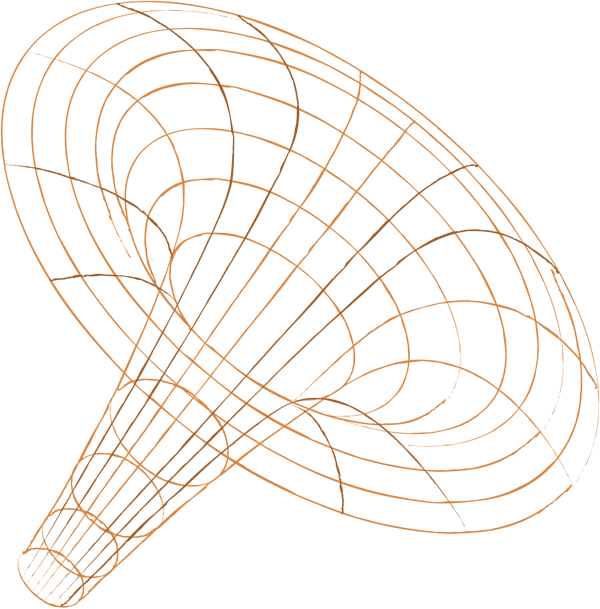
Nature, by contrast, has already realized quantum systems at incomparably larger scales. Black holes represent quantum hardware operating with ~10⁷⁷ degrees of freedom for a solar-mass object, encoded at Planck-scale densities and stabilized by gravity itself.

03.
Accessing existent
quantum substrates.
The relevant question is no longer how to fabricate such a system—but how to access, couple to, and extract information from one that already exists. Ntangled is driven by this perspective: instead of forcing scalability through ever-larger terrestrial devices, we explore how space-based resources—just as solar energy before them—can be utilized directly.
By treating black holes not as unreachable curiosities but as existing quantum computational substrates, we aim to reframe quantum computing as a problem of extraction, coupling, and interpretation rather than brute-force construction.
See Also
what we are doing